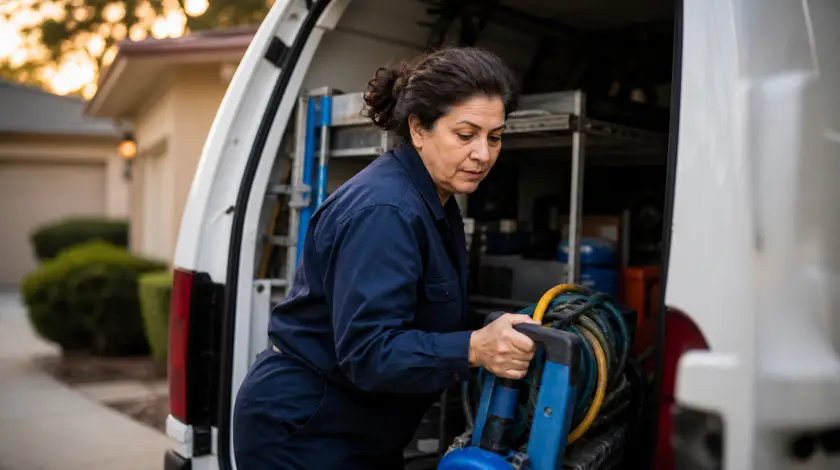

Being great with a heat pump and running a company that installs them are two different skills, and the second one is where most new HVAC owners get caught off guard. Buying a van, printing a logo, and waiting for the phone to ring is the easy part. The real work is picking the jobs you can serve well, getting your licensing and operations squared away, pricing so there’s profit left after the invoice clears, and building a call flow that keeps good leads from slipping through the cracks.
Start with the kind of HVAC company you can actually run
New owners tend to make the same early mistake. They try to look bigger than they are, offering every service, every area, every hour, every kind of customer. It sounds ambitious. In practice, it turns a brand-new business into a dispatch mess before the first full month is out. Start narrower than feels comfortable. You might focus on:
- Residential service and repair
- Maintenance plans for homeowners
- Ductless mini-split installs
- Light commercial maintenance
- Replacement estimates for aging systems
- Emergency repair inside a tight service area
The right niche usually isn’t the biggest one. It’s the one where you can answer fast, diagnose well, price clearly, and finish the job without stretching yourself past the breaking point. If you’re leaving a technician role, look hard at the jobs you already know how to run from first call to final invoice. That’s almost always a better starting line than chasing every expensive install in town.
Check licensing, permits, and certification first
HVAC isn’t a business where you sort out compliance later. Before you sell a single job under your own name, check the rules for your state, county, and city. The U.S. Small Business Administration notes that licenses and permits depend on your business activity and location, so there’s no one national checklist that covers every HVAC company. Depending on where you work, that can include:
- A contractor license
- A mechanical license
- A state or local business license
- Trade permits for certain jobs
- Insurance or bonding requirements
- Business registration
- Federal and state tax IDs
Then there’s refrigerant certification, which is not optional. The EPA requires technicians who work with regulated refrigerants to pass an EPA-approved Section 608 certification test for the type of equipment they service. If your business will maintain, service, repair, or dispose of equipment that contains refrigerants, treat that as a hard requirement, not a someday item.
This is also the moment to sit down with an accountant, an insurance broker, and maybe an attorney if you need help picking a structure. The office side doesn’t have to be complicated. It does have to be real.
Build your startup budget around real jobs
Your budget should match the work you actually plan to take first. Starting with residential service calls looks nothing like a company trying to sell full-system replacements out of the gate, and a commercial maintenance focus changes your tools, insurance, and scheduling again. At a minimum, map the cost of:
- Vehicle or vehicle upgrades
- Core tools and testing equipment
- Safety gear
- Ladders and jobsite equipment
- Initial parts and materials
- Licensing and permit costs
- Insurance
- Phone, scheduling, and invoicing tools
- Website and local marketing
- Fuel, parking, and maintenance
- Bookkeeping and tax support
Then add the cost almost every new owner forgets: time. You’ll spend hours estimating, driving, returning calls, ordering parts, writing invoices, following up, and cleaning up callbacks. If your pricing only covers wrench time, the business will feel busy long before it feels healthy.
Price for profit, not just for the yes
A low price wins the first job. It can also train customers to expect numbers that will never keep the company alive. Your pricing has to cover far more than labor and materials. It has to carry overhead, admin time, warranty risk, the estimates you don’t get paid for, drive time, payment processing, taxes, marketing, and your own pay. A quick review of your core offers helps:
| Offer | What to define | Why it matters |
| Diagnostic visit | Trip fee, inspection scope, and what happens next | Keeps service calls from becoming unpaid consulting |
| Repair work | Labor, parts, markup, and warranty terms | Protects margin and sets customer expectations |
| Maintenance plan | Visit frequency, included checks, and exclusions | Creates repeat work without vague promises |
| Replacement estimate | Estimate process, options, deposit rules, and timeline | Keeps large jobs organized from the first call |
| After-hours work | Availability, service area, and premium rules | Prevents urgent calls from eating the whole schedule |
| Bottom line | Price around the business you need to run | Keeps growth from turning into unpaid stress |
Don’t price like an employee moonlighting on the weekend. Price like an owner who still has to keep the doors open after the customer pays.
Set up your phone system before you start marketing
For an HVAC startup, the phone isn’t an admin detail. It’s where the jobs begin. A homeowner with no cooling in July is not calmly filling out a form and waiting three business days for a reply. They’re calling the company that looks available, sounds professional, and picks up. So before you run ads or lean hard into local marketing, decide a few things:
- What number customers should call
- Who answers during working hours
- What happens when you’re on a job
- What happens after hours
- How calls get logged
- How urgent calls get separated from routine ones
- How estimates and callbacks get assigned
This is where a dedicated business number earns its place. It keeps customer calls out of your personal phone chaos and gives you a cleaner way to handle forwarding, voicemail, call history, and tracking. And if you’re too small to hire office help, an HVAC AI agent can answer when you’re busy or unavailable, collect caller details, qualify the request, schedule against your calendar when it’s connected, and route calls based on how you set them up. That’s most valuable when the alternative is a missed call with zero context. The point isn’t to sound like a national chain. It’s to make sure a real customer doesn’t vanish because you were up in an attic, under a unit, or driving to the next stop.

Write down your first dispatch process
Dispatch doesn’t mean a call center. It just means you know what happens between “my system isn’t working” and “the tech is on the way.” For your first version, spell out:
- What questions you ask on the first call
- How you decide whether the job is urgent
- What areas you serve
- How you confirm appointment windows
- What information goes into the job notes
- When customers get reminders
- How estimates are approved
- How invoices are sent
- How follow-up happens after the job
This matters even when you’re the only technician. Especially then. When you’re tired, booked, and answering calls between jobs, a written process is what keeps the business from becoming whatever you can remember from the front seat of the van.
Market the service you can fulfill
Early marketing should match your capacity, not your ambition. If you can only handle a few service calls a day, don’t launch a campaign promising instant coverage across five counties. If you don’t want after-hours work yet, don’t put emergency service at the center of your website. Start with channels that fit your first real offer:
- Google Business Profile
- A simple service-area website
- Local service pages
- Review requests after good jobs
- Yard signs where they’re allowed
- Referral relationships with property managers
- Maintenance-plan outreach to past customers
- Local sponsorships inside your service area
Keep the message plain. Tell people what you do, where you work, how to call, and what happens next. A clear promise beats a clever slogan every time.
Track which calls turn into jobs
You don’t need enterprise analytics to run a smarter HVAC startup. You do need to know which marketing is creating actual work. Track:
- Where each lead came from
- Whether the call was answered
- What service the customer needed
- Whether the job was booked
- Estimated or completed revenue
- Reason for lost jobs
- Callback or warranty issues
A plain call log won’t get you there. You want to know which calls became profitable jobs and which campaigns just made noise. Call tracking connects phone calls back to their marketing sources, and 800 Intelligence can turn those conversations into summaries, scores, and suggested next steps when recording and transcription are enabled. Together, that’s cleaner information to lean on before you decide where to spend more. If you’re new to the idea, this beginner’s guide to call tracking for home service businesses walks through the basics.
Build follow-up into the first month
A new HVAC company can leak a surprising amount of work right after the first call. Estimates sit untouched. Maintenance plans get mentioned once and forgotten. Customers say they’ll call back, then quietly pick someone else. So build follow-up rules before you actually need them:
- Call back missed leads the same day when you can
- Follow up on estimates within one business day
- Send maintenance-plan info after a repair
- Remind customers before seasonal tuneups
- Ask happy customers for reviews
- Reconnect after big jobs to confirm everything’s still running right
That’s not busywork. It’s how a single service call turns into a healthier book of business.
Keep the operation simple enough to improve
Your first version won’t be perfect, and that’s fine. A simple system you actually use beats a sophisticated one that collapses by week two. Start with the basics:
- A clear service area
- A defined job type
- Required licenses and certifications
- A business number
- A written dispatch process
- Pricing that includes overhead
- A way to track calls and jobs
- A follow-up habit
Then look at what’s happening every week. Which calls are you missing? Which jobs are profitable? Which neighborhoods keep responding? Which requests are a bad fit for the company you’re trying to build? Those answers are what make the whole operation sharper over time.
Start with the calls you can win
Starting an HVAC company takes more than tools and trade skill. It takes a setup that helps customers reach you, helps you choose the right work, and gives every good lead a clear next step. 800.com can help you set up a professional business number, track which marketing makes the phone ring, and use AI Agents to catch calls when you’re busy on the job. HVAC work sits inside 800.com’s home services platform, so the same tools built for plumbers and electricians fit a new HVAC shop too. Start with a phone system that makes your company easy to reach and easy to grow. Try AI Agents for your HVAC calls with a 7-day free trial.