

HVAC companies, roofers, plumbers, electricians, and other home service businesses all struggle with missing calls. Even if they don’t know it.
It’s almost impossible not to.
Calls come in while everyone on staff is busy: on a job, driving, talking to another customer, taking a break, or even sleeping. And with the sheer number of spam calls these days, it’s pretty easy to get into the habit of ignoring unfamiliar numbers.
But many of your calls are potential customers.
And here’s the tricky part: If someone calls and hangs up without leaving a voicemail, there’s no way to know whether they were a spam caller or someone ready to book a $5,000 job.
The good news is there are some pretty simple ways to answer more calls. And you start by figuring out exactly how many are getting missed.
1. Figure out how many prospect calls are getting missed
Let’s start with the numbers.
How many calls does your business get every day? How many are answered? How many are missed? And when are those missed calls happening?
With an 800.com number, this grid is pretty easy to see (your phone system might have this insight too). Here’s what it looks like:
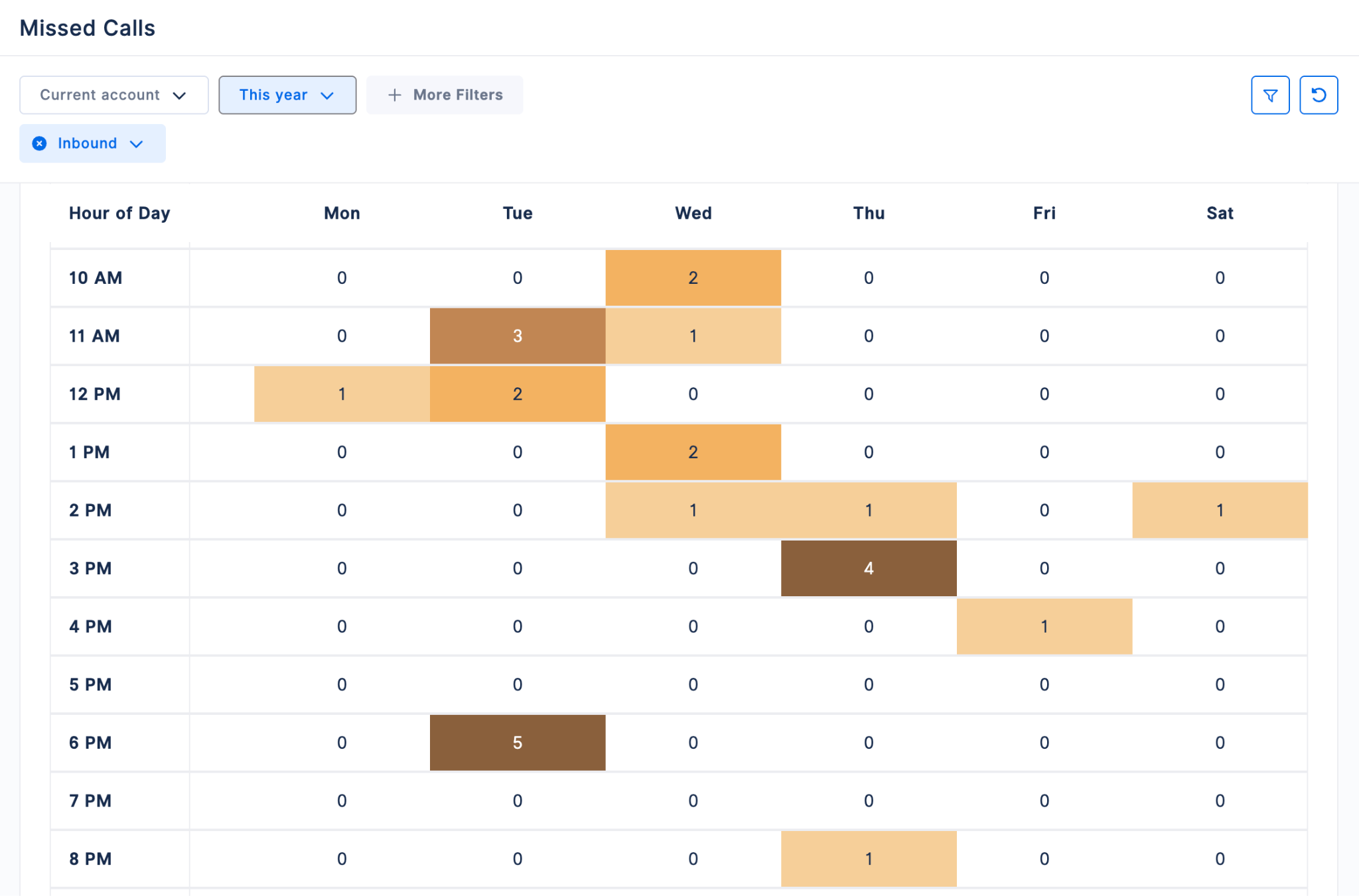
Answer rate is useful here too. Missing 10 calls out of 20 is a much bigger problem than missing 10 calls out of 200 (although every missed call can cost you).
This is one reason it’s helpful to have a proper business number with call tracking software like 800.com. You need access to:
- Who called
- When they called
- Whether someone answered
- How long the phone rang
- Whether someone called them back
It’s even better if calls can be tied back to their source.
If the business is paying for Google Ads, local listings, SEO, Facebook ads, or anything else designed to generate leads, those efforts are ultimately trying to get potential customers to call.
Once you know who’s calling and how many calls are getting missed, you can move on to why.
2. Figure out why calls are getting missed
Next, let’s look for patterns in missed calls.
Are most missed calls happening because:
- Everyone is on a job
- Someone is driving
- The receptionist is already on another call
- Unfamiliar numbers look like spam
- Calls are coming in after hours
- Nobody is quite sure who’s supposed to answer
- The phone isn’t ringing somewhere anyone can hear it
Talk to your staff and come up with a good hypothesis on the main reasons your phone is going to voicemail when it does.
You can use a grid like the one above to understand when the misses happen, too.
Maybe almost every call gets answered from 9 a.m. to 3 p.m., but things fall apart once the office staff goes home. Or maybe Monday morning is the problem because five people call at once.
Once there’s a pattern, it’s a lot easier to fix.
3. Make sure the business phone actually rings
Seriously.
If the goal is to answer as many calls as possible, the phone needs to ring. Out loud.
Check the volume. Check Do Not Disturb. Check which phones are actually receiving calls.
And check where the business number is forwarding.
Is it going to a cell phone? A receptionist? An office phone? Multiple employees? An old employee who left six months ago?
It’s worth checking.
4. Decide exactly who answers, and when
If multiple people can answer the phone, decide who actually should.
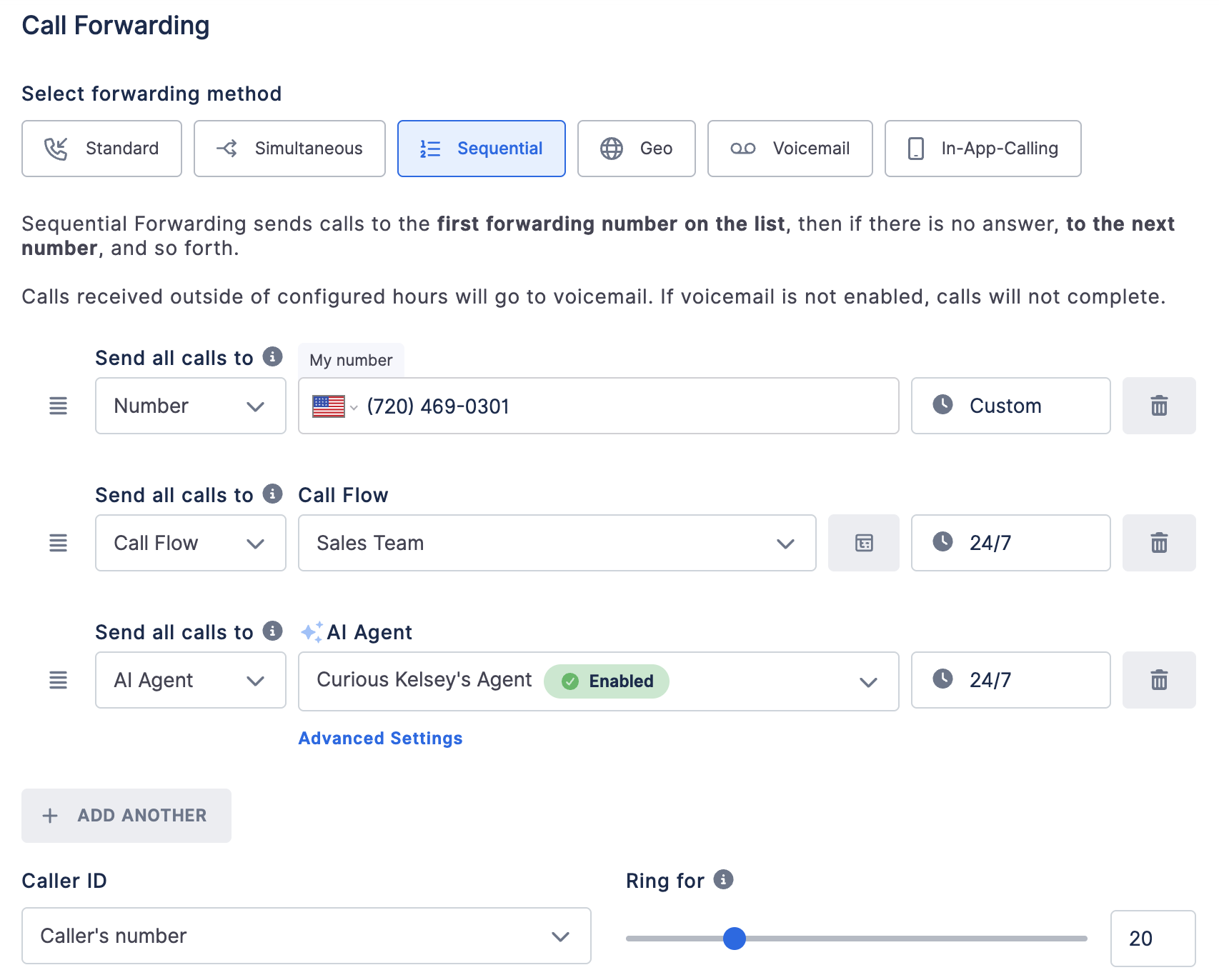
Maybe the receptionist gets the first shot. Then the owner. Then an AI voice agent.
Another option is to ring multiple people at once and let whoever is available answer.
You can set up these rules and more in your phone system. 800.com allows for call forwarding rules based on a ton of variables including geo-location, day and time, and more:
For businesses where phone calls regularly turn into sales, it can even make sense to incentivize the pickup. For example, you could give the person who answers attribution for the lead. Or track booked appointments. Or even offer a small bonus based on sales.
Whatever the system is, everyone should know who’s responsible when the phone starts ringing.
5. Set up call forwarding rules
Once there’s a clear order, set it up automatically in your phone system.
For example:
Receptionist → sales team → AI voice agent
Or have a few people from the same team get the call at the same time. If none of them answers, send the call to your AI voice agent or an answering service if nobody picks up.
A business phone system makes it possible to automate the call rules. And many, like 800.com, will offer an embedded AI voice agent that can train on your business.
Set up the rules and your agent, and make sure you train your team on them too.

6. Plan for overflow calls
After-hours calls are an obvious problem. Overflow calls are easier to miss.
A receptionist can be sitting at their desk at 2 p.m. and still miss a call because they’re already talking to someone else.
Three customers might call at once. Everyone might be out on jobs.
So there should be somewhere for the next call to go too.
That could be another employee, an answering service, or an AI voice agent.
This is especially important during the busiest times of day. More business usually means more calls, which also means more opportunities for calls to slip through.
7. Have a plan for nights, weekends, and vacations
Everyone sleeps. But customers, unfortunately, don’t always have emergencies during business hours.
An AC can go out on a 90-degree Saturday afternoon. A basement can start flooding at 10 p.m. A furnace can stop working in the middle of the night.
When that happens, people start calling.
A traditional answering service is one option. A real person can answer the phone, collect information, take a message, and potentially schedule an appointment.
An AI voice agent is another option and is typically more affordable. AI agents can answer calls 24/7, collect information, answer basic questions, qualify leads, route urgent calls, and even book appointments.
With either of these you can choose to have your phone ring to get the emergency call. Or have a job booked first thing the next morning.
AI agents can also be used as backup coverage. Staff can answer whenever they’re available, with unanswered calls automatically going to an AI agent after a few rings.
Either way, it’s worth having something better than voicemail or an unanswered phone.
8. Set rules for calling people back
For calls that are sent to AI voice agents, or voicemail if that’s what you chose, you need a prompt plan to call back.
Create a set of rules for what happens next.
Who checks missed calls? How often? How quickly does someone call back?
For home service businesses, faster is usually better.
Someone looking for an electrician, roofer, HVAC company, or plumber may be calling several companies in a row. Waiting an hour to return the call gives your competitor plenty of time to answer first.
And don’t limit callbacks to people who leave messages.
A missed call is still a missed call. If the number looks legitimate, give it a call.
9. Test the whole system
Every once in a while, have a friend or employee call the business.
Don’t tell the person who’s supposed to answer. Make this a secret shopping situation.
Call during the day. Call after hours. Call when the receptionist is already on another call. Try a Saturday.
Then see what happens.
Did someone answer? How long did it ring? Did the backup person get it? Did the AI agent pick up? How well did it answer the call?
If nobody answered, did someone call back?
If something doesn’t work the way it’s supposed to, figure out why and fix it. Every process needs a regular stress test to find cracks and make sure it’s rock steady.
Answer more of the calls you’re already getting
A home service business doesn’t need someone sitting next to the phone 24 hours a day to improve its answer rate.
Track the calls coming in. Find out when they’re getting missed. Make sure the right phones are ringing. Give staff clear rules for answering and forwarding. Set up overflow and after-hours coverage. Call missed numbers back quickly.
Then test everything occasionally to make sure it still works.
Getting someone to find the business and make the call takes a lot of work (and often a lot of money).
It’s worth making sure someone answers.
Try 800.com AI Agents with a 7-day free trial.