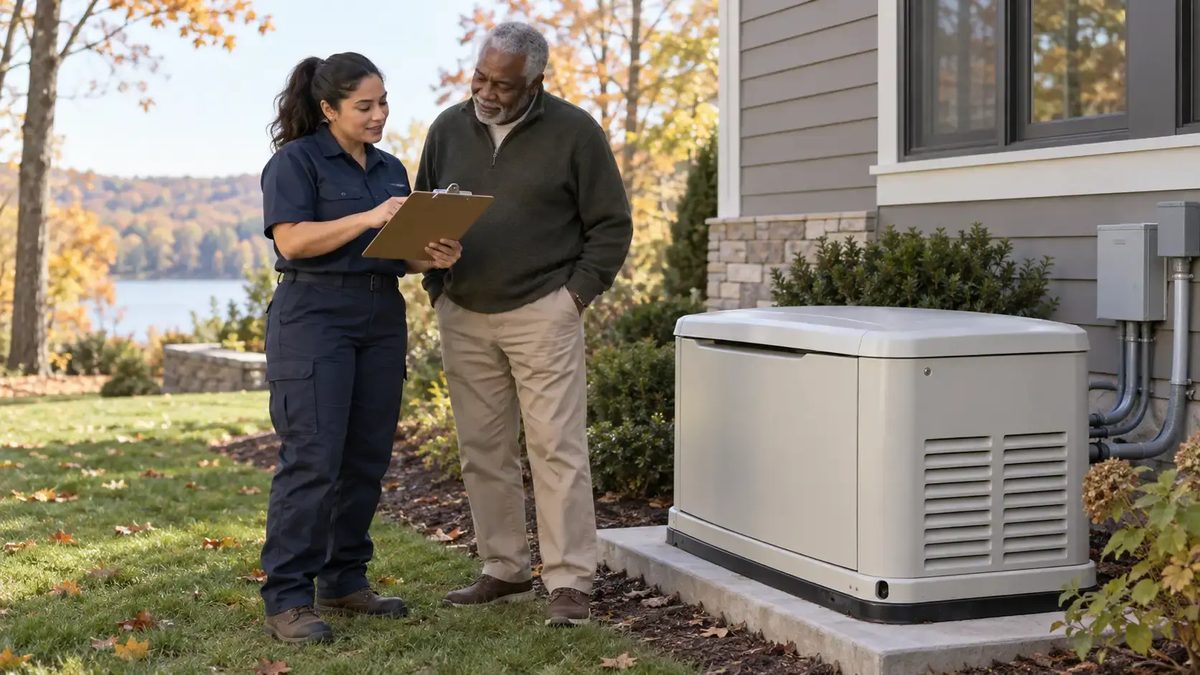

Getting through fall and building a business that survives February are two different jobs, and the second one is where most contractors lose ground. October takes care of itself. The phone rings, the calendar fills, the revenue lands. Then January arrives and the schedule thins out, and it feels like the season just decided that on its own.
It didn’t. February’s bookings get made in October, during the one visit all year where nothing is broken. The homeowner isn’t stressed, isn’t watching the clock, and isn’t waiting on a repair quote. That’s the easiest conversation you’ll ever have about a system that’s quietly running out of road — and most of it never leaves the van.
Capture the equipment, not just the visit
Your tech already knows, standing in that basement, whether a furnace is making it two more winters. That assessment is worth money, and right now it’s evaporating the second he pulls out of the driveway.
Make it three required fields on the ticket:
- Manufacture year
- Model and equipment type
- Condition, in plain language
- Repairs performed today
- Anything flagged for next season
Then set your own thresholds. Anything past fifteen years goes on a list. Anything that’s now had its second real repair goes on the same list. So does anything your tech wouldn’t put his own family on.
That list is your January call sheet. And the call isn’t cold — it opens with “we were out in October and noted your unit’s a 2009, how’s it holding up in this cold?” You’re following up on a conversation you already had, at the exact moment the equipment is making your argument for you and the heating bill is backing you up.
One more thing while you’re there: leave a written estimate range with a date it’s good through. It costs you two minutes in October and it gives the January call a reason to exist.
Mail a checklist, not a coupon
A coupon gets clipped or tossed, and either way it’s gone inside a week. You’re not trying to buy a booking in October. You’re trying to be the name a homeowner sees every morning for the next six months.
A one-page winter checklist does that, as long as it’s actually useful:
- Filter change schedule by filter type
- Thermostat setback guidance
- Vents and returns to keep clear
- CO detector battery reminder
- What counts as a no-heat emergency
- When to call instead of troubleshooting
That last line earns its spot. A homeowner who knows the difference between “flip the switch back on” and “call right now” reaches you at the right time, instead of after a pipe has already frozen. Your number goes at the bottom, and the page goes on the fridge.
Be the closest number at eleven at night
It’s fourteen degrees, the furnace quit, and somebody is standing in a cold kitchen deciding who to call. They are not researching contractors. They’re looking for a number that’s already in front of them.
Put one there three times: a sticker on the furnace at the fall visit, a magnet, and the checklist you mailed. Cheap, and it keeps working all winter without you touching it.
Then answer the phone. A no-heat call that rings out goes to whoever picks up first, and you will never know it happened — no voicemail, no callback, no record. If round-the-clock coverage isn’t realistic for your shop, and for most it isn’t, an AI agent on your HVAC line can answer, collect the details, book your next available slot, and push a genuine emergency to whoever’s on call. The point isn’t to sound like a national chain. It’s to make sure a homeowner in a cold house doesn’t become somebody else’s customer at 11pm.
Book spring before you pack up the tools
You’re already standing in the house. Ask for the AC appointment and put it on the calendar before you leave.
It takes under a minute and it converts a dead April week into booked work you didn’t spend a dollar acquiring. It also gives you a reason to be back in that home before the equipment fails on its own terms.
Give every fall piece its own number
Here’s where fall campaigns quietly die. The postcard mails in October. The call comes in January. By then the mailer is forgotten, the call lands on your main line, and the postcard looks like it did nothing at all. So you cut it next year — and cut the thing that was actually working.
The fix is boring and it works: one tracking number per piece.
| Fall asset | What to define | Why it matters |
|---|---|---|
| Tune-up postcard | Its own number, mail date, ZIP range | Shows whether the mailer produced January calls, not just October ones |
| Winter checklist | Its own number, printed at the bottom | Tells you if the fridge strategy is paying off |
| Furnace sticker | Its own number, placed at the fall visit | Separates emergency calls from everything else |
| Yard signs | Its own number by neighborhood | Shows which areas respond before you buy more |
| Main service line | Who answers, and what happens when nobody can | Protects the calls you already paid to create |
| Bottom line | Track the call back to the piece that caused it | Keeps you from cutting the campaign that’s working slowly |
800.com call tracking ties each call back to the piece that produced it and, just as importantly, shows whether anyone answered. That second number matters more in winter than any other season. A missed no-heat call isn’t a lost lead. It’s a job that went to a competitor while you were under somebody else’s unit.
Start with the visits you’ve already got booked
You don’t need a new campaign. You need the visits on next week’s schedule to leave behind more than a paid invoice.
Get the equipment-age field onto your tickets this week. Set the tracking numbers before the postcards go to print. Put a sticker on every furnace you touch between now and Thanksgiving. Every fall visit either builds your January pipeline or doesn’t, and the difference is about ninety seconds of work per house.
Fall is the last quiet stretch you get. Set up the phone and tracking side now, while you still have the time to think about it.