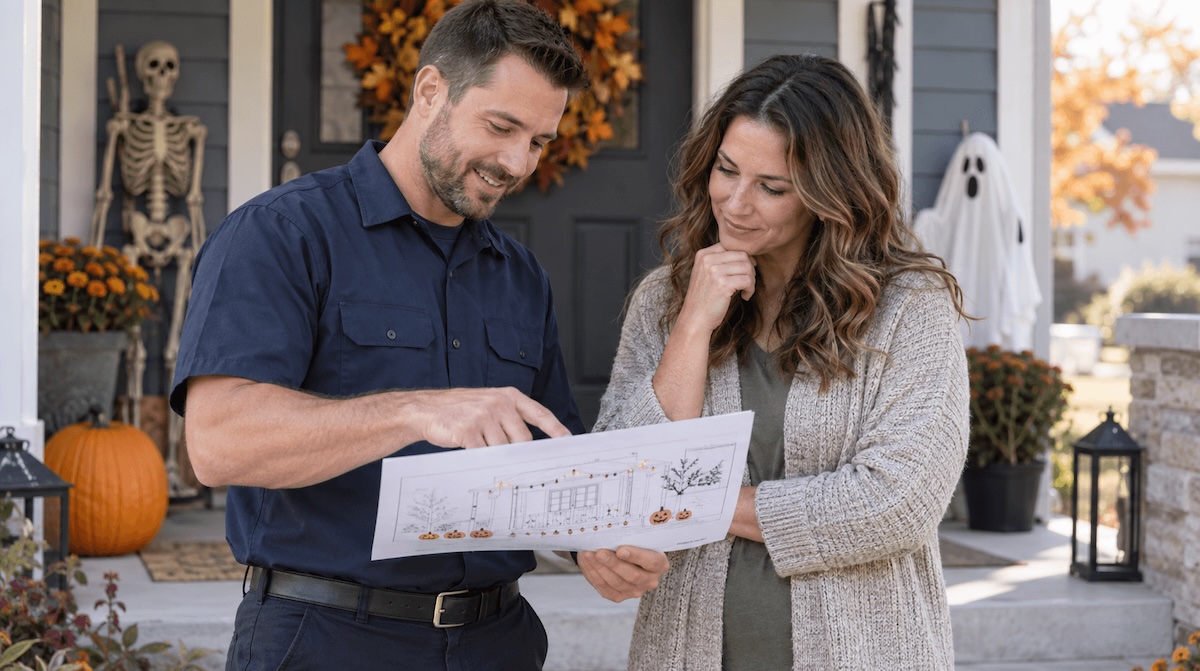

A homeowner planning a Halloween display has one real question for an electrician: can my yard handle this? A seasonal flyer works when it answers that question with a booking, not with a coupon on general electrical work.
This is a print piece — a neighborhood drop or mailer timed to land in early October, while displays are still being planned and not yet staked into the lawn. Build it around display planning. Someone stringing lights along a gutter needs a different conversation from someone running three inflatables and a fog machine off a single exterior outlet.
Lead with education: which Halloween displays might need a professional assessment?
The checklist is the half of the flyer people actually read. Fill it with display setups that warrant a look, and make every item point toward booking. A homeowner can describe what they’re putting in the yard; they can’t assess whether the yard will carry it. Give them criteria to weigh and you’ve handed them a way to talk themselves out of the call.
Use copy like this:
Book an assessment if your display includes:
- Power running to more than one area of the yard
- Inflatables, projectors, or fog machines — motors and heaters, not just lights
- Extension cords crossing walkways, driveways, or garden beds
- Decorations staying up overnight or through rain
- Outlets you’re not certain are rated for outdoor use
Close with a single line: If any of these describe your display, book an assessment.
Keep it to what a homeowner can observe without opening equipment or testing circuits. Avoid any claim about how many decorations a home can support — that determination happens on site, and it doesn’t belong in print.
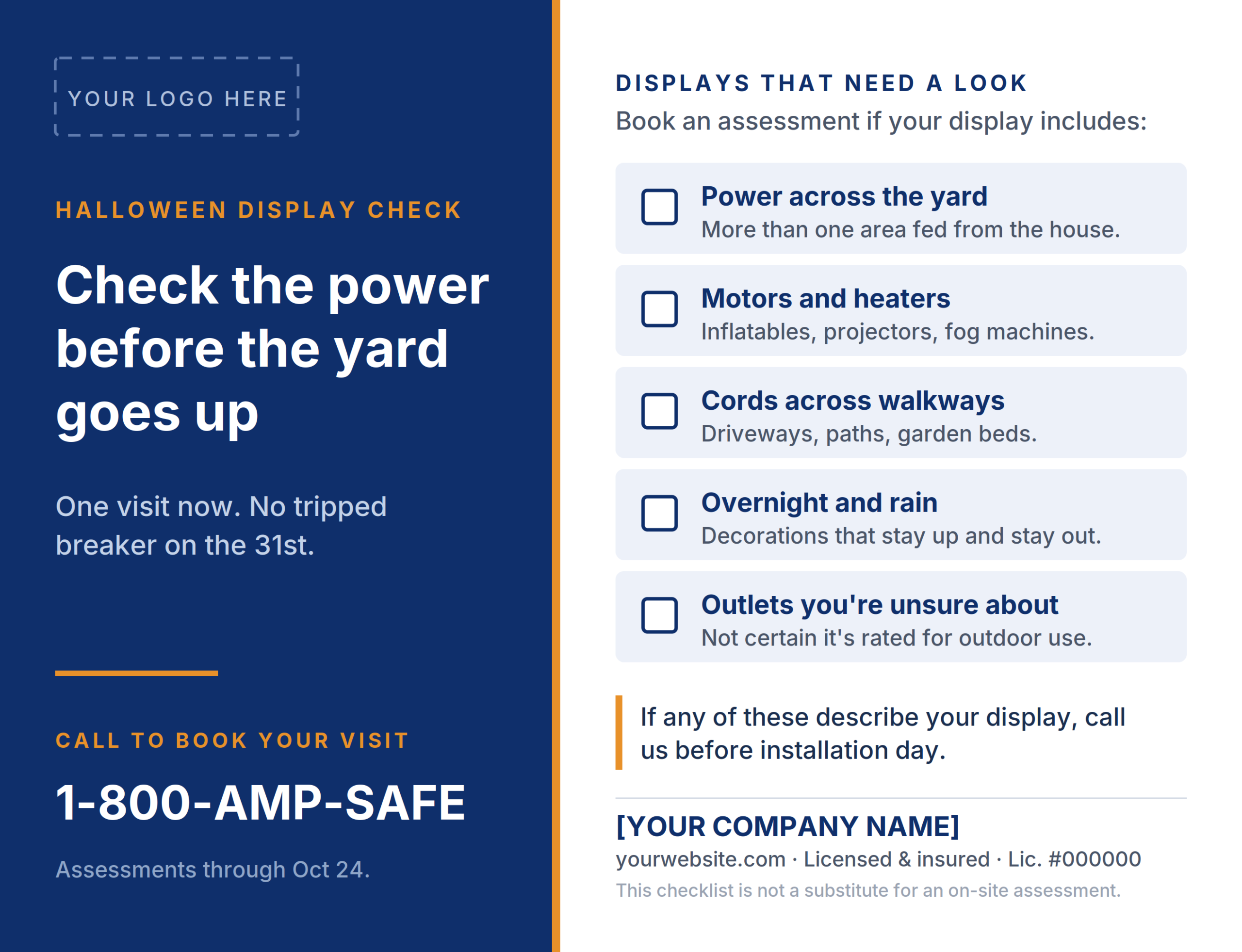
Give the flyer a clear contact number
Put the business name beside the number customers should call, and keep that area uncluttered. Don’t bury the booking action under a list of unrelated services.
On the call, establish the service address and the planned display, then confirm availability before committing to a booking. If a caller describes an immediate hazard, switch to your company’s approved emergency guidance and stop the sales conversation there.
Measure results with call tracking
If you’re printing separate flyer runs by neighborhood, give each run its own number. Every flyer still shows one number — the difference is that the number tells you where the call came from, without asking the caller. That’s how you learn which streets produced booked assessments and which produced calls outside your service radius.
Then report booked assessments separately from out-of-area calls and general inquiries. Total call volume tells you nothing useful about whether the campaign should run again.
If you need dedicated numbers backed by call tracking, 800.com can provide you with vanity, 800, or local numbers. Route them all to the same line so whoever answers doesn’t have to track which one rang, and test each destination before the print file goes out.